Tutorials by Topic
A structured learning path through infrastructure, web, mobile, red team and blockchain security testing.
A structured path through penetration testing, from first principles to advanced Web2 and Web3 topics. Work top to bottom, or jump to the area you need. Everything here assumes you test only systems you own or are authorized to assess, and that you practise on deliberately vulnerable labs and CTFs first.
Infrastructure Penetration Testing
The methodology that underpins every engagement, aligned with PTES and OSSTMM: reconnaissance, scanning, enumeration, exploitation, post-exploitation and reporting.
Reconnaissance & scanning
Map the attack surface before touching it. Passive OSINT, then active host discovery and port scanning with Nmap.
Enumeration & hardening
Turn open ports into an inventory of services and users, and learn to audit a host so you can fix what you find.
Web Application Penetration Testing
Test web apps and APIs against the OWASP Top 10 using the Web Security Testing Guide as your method.
The OWASP Top 10
What each category means, how to test it with multiple user roles, and how to fix it.
Automated scanning done safely
Use Nuclei to cover known issues at scale without disrupting the target, and write your own checks.
Mobile Application Penetration Testing
Assess Android and iOS apps with the OWASP MASVS/MASTG: static analysis, dynamic instrumentation and anti-tampering.
Dynamic analysis with Frida
Hook methods, trace behaviour and understand client-side protections on apps you are authorized to test.
Cloud & Container Security
Review cloud configuration and container supply chains with open-source tools.
Cloud posture assessment
Run Prowler against CIS benchmarks and prioritise the findings that matter.
Container & supply-chain scanning
Scan images, IaC and clusters, and generate SBOMs with Trivy.
Red Teaming
Simulate real adversaries and test detection and response.
Active Directory attack paths
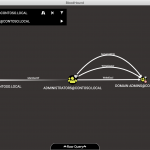
Model AD as a graph with BloodHound to find — and remove — privilege-escalation paths.
Blockchain Security
From EVM internals to auditing Solidity and analysing DeFi attacks.
EVM foundations
Understand how the Ethereum Virtual Machine really works — selectors, calldata and low-level calls.
Smart contract auditing toolchain
Static analysis, call-graphing, symbolic execution and fuzzing — and how they fit together.
DeFi attack patterns
Study real vulnerability classes like the ERC-4626 vault inflation attack.